
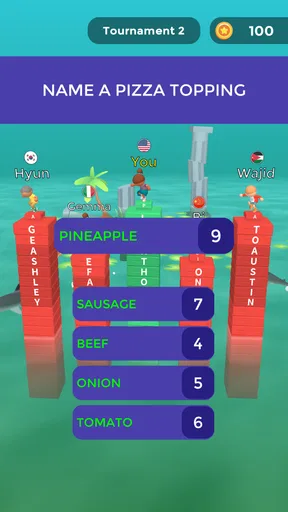
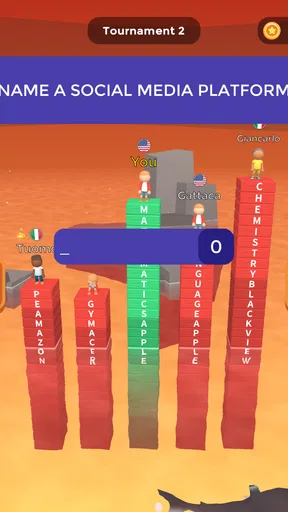
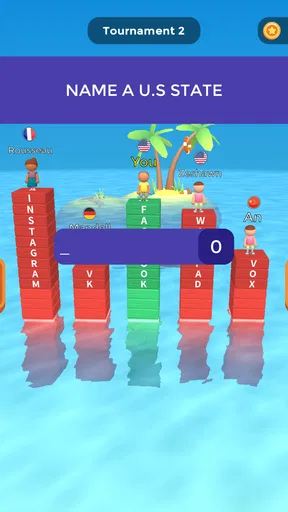
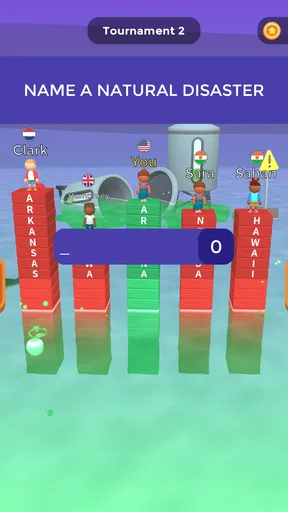
Text or Die review
 Analysis by GetAllApps
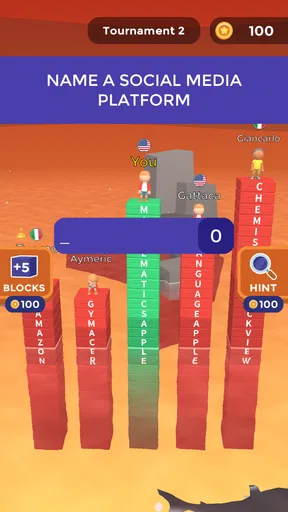
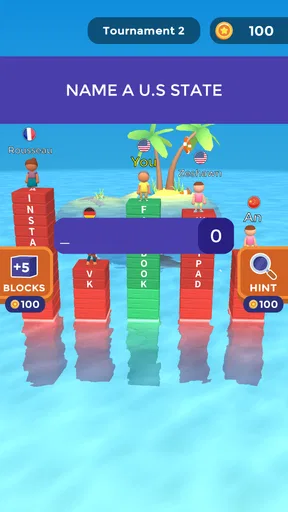
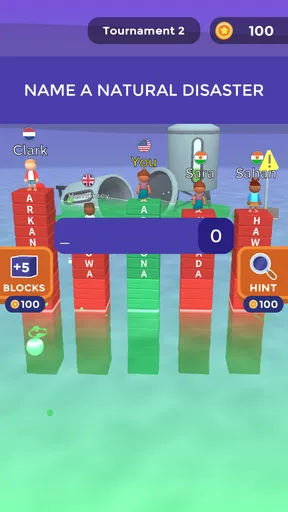
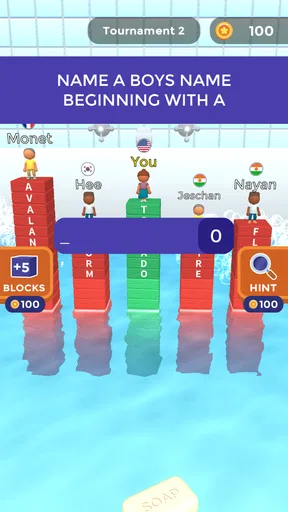
Text or Die is a word game built around a simple but revealing challenge: when a prompt asks for an answer, can you think of a long one before the danger catches up? I like that its trivia premise rewards vocabulary and quick associations rather than obscure specialist knowledge. It is easy to understand at a glance, but the pressure changes how you approach even familiar questions. My overall take is that it works best as a light, competitive pick-up-and-play game—not as a serious quiz or a deep word puzzle.
Why the long answer matters
The central idea gives ordinary trivia a useful twist. Instead of treating every correct answer as equally satisfying, the game encourages you to find a lengthy response. That makes a prompt feel less like a test of whether you know one fact and more like a small exercise in searching your mental vocabulary. A short, obvious answer may be correct, but a longer one can be the smarter move.
That distinction is what gives the rounds their personality. I find myself weighing certainty against length: do I type the first answer that comes to mind, or pause for a moment to remember a longer alternative? The best decisions are not always the most complicated. If I reach too far for a word I am unsure of, the extra letters are no help; a dependable answer is often worth more than an ambitious guess.
The game’s shark-themed stakes make that word hunt feel urgent without changing its basic, accessible premise. It is a playful framing device for a familiar quiz activity, and it helps give the rounds a clear sense of consequence. The result is more energetic than a standard question-and-answer quiz, though the appeal still depends heavily on enjoying word recall under pressure.
As a trivia game, it sits between conventional quizzes and word games. A typical quiz tends to reward getting the fact right, while a classic word puzzle may ask you to solve a fixed linguistic problem. Here, the fun comes from producing an answer that fits and then considering whether a longer one would have been better. If you like both categories, that combination is the main reason to try it.
A quick game with a useful social angle
I can see this working well in small gaps in the day: while waiting for someone, taking a short break, or looking for a low-effort game to pass around among friends. The prompts give people an immediate topic to discuss. Even when someone knows the answer, the group can still debate whether there is a longer option, which turns a simple round into a bit of friendly wordplay.
That makes it a better fit for casual company than for anyone seeking a long, story-driven session. You do not need to prepare, learn a complicated control scheme, or set aside a substantial block of time to understand the basic appeal. I would use it as a short diversion rather than expect it to become the focus of an evening.
One practical way to get more out of the premise is to think in categories before typing. If a prompt suggests a broad topic, I mentally scan for subgroups—places, objects, examples, or related terms—rather than settling immediately on the first familiar word. That small habit helps me find a longer answer without turning every turn into a slow spelling exercise. It also keeps the game’s central trade-off in view: speed matters, but so does choosing an answer I can confidently enter.
What the format does well—and where it can snag
The strongest design choice is how little explanation the concept needs. The aim is clear, and the word-length incentive gives each answer a second layer of thought. I appreciate that because many trivia games lean almost entirely on whether I happen to know a particular fact. Here, recall still matters, but vocabulary and flexible thinking can give a player another route to a strong response.
That same emphasis creates a limitation. If you prefer questions with one precise answer, a format that values longer responses may feel less satisfying. The game asks you to think in terms of useful length, not simply accuracy or depth of knowledge. Players who enjoy exact-answer quizzes may therefore prefer a conventional trivia app, while people who like anagrams or carefully constructed word puzzles may want a more deliberate challenge than quick-response rounds provide.
Typing is also part of the experience, so the game is naturally less appealing when you want to play without looking at or interacting with your device. On a small screen, entering a word quickly can feel more like a test of efficient tapping than an elegant word puzzle. I would not choose it for a relaxed, hands-free moment or for a setting where concentration is already split; its pace works best when I can give the prompt a brief, clear burst of attention.
Another trade-off is that the long-word strategy can become repetitive if a player treats every prompt as a hunt for maximum length. The more satisfying approach, in my experience, is to stay flexible: sometimes the obvious word is the sensible choice, and sometimes a quick mental scan uncovers a better one. If you try to optimize every answer, the playful premise can start to feel like a routine calculation rather than a lively trivia game.
Who should give it a try
I would recommend it to people who enjoy casual word challenges, quick trivia, or friendly competition built around language. It is especially appealing if you like the moment when a prompt triggers several possible answers and you have to choose one before overthinking it. People who play word games to strengthen recall or simply enjoy finding unusual examples may appreciate that extra layer.
It is less suited to players who want a carefully paced solo puzzle, a substantial campaign, or trivia focused on detailed learning. The game’s premise is designed around quick thinking and answer length, so it is not the option I would pick when I want explanations, a lesson-like experience, or a test of specialist knowledge. If you find timed word recall stressful, the shark framing may add pressure rather than charm.
For a realistic everyday use, I would keep it in mind for a short break when a friend is nearby and both of us want something easy to start. We could take turns reading the prompt and arguing for a longer answer, without needing to arrange a full game night. By contrast, if I were commuting in a crowded place and could not comfortably type, or if I wanted a quiet puzzle to solve at my own pace, I would choose a different kind of game.
Practical details before you install
Rollic Games developed Text or Die, which is listed as a free game for Android. It has an average rating of 4.1 from around 285,000 ratings, and has been installed over 10 million times. Those figures suggest that the quick word-game idea has reached a broad audience, although popularity alone does not guarantee that its pace or style will suit every player.
The game is rated Everyone 10+, and its in-app purchases range from $0.99 to $24.99 per item. I would keep that in mind if you prefer games with no optional spending, especially if a child will be playing. The core download is free, but the presence of purchases means it is sensible to review spending settings on the device rather than assume that every part of the experience is cost-free.
It was released on August 14, 2021, and the current version is 30.2.2, with Android 7.0 as the minimum operating system. The store also shows around 22,000 written reviews. These details make it easier to judge basic compatibility and the scale of its audience; for the actual decision, I would focus more on whether you enjoy quick answers, typing, and the unusual incentive to make a correct response longer.
My verdict
Text or Die succeeds because it gives a familiar trivia round a clear, memorable twist. I enjoy the split-second choice between a safe answer and a longer one, and the shark-themed stakes help keep that decision lively. It is approachable enough to try casually, but its particular appeal comes from word recall and the small strategy of choosing how much to risk.
I would recommend it to someone who wants a light word-and-trivia game for brief sessions, particularly if they enjoy comparing answers with friends. I would steer a player toward a traditional quiz for fact-focused questions, or toward a slower word puzzle for a more thoughtful solo challenge. For me, this is a fun change of pace when I want quick verbal play; its limits are clear, but so is its best use.
Pros and cons
Pros
- Simple controls make rounds easy to pick up.
- Each answer can be entered at your own pace.
- The survival theme adds stakes to trivia questions.
- Short rounds work well for quick play sessions.
- A broad mix of prompts keeps questions varied.
Cons
- Some prompts may have several valid answers.
- Longer answers can be easier to survive with.
- Repeated questions can make later rounds feel familiar.
- Ads may interrupt the flow between rounds.
- The game requires an internet connection for some features.


